
Locks That Stick, Fail, or No Longer Catch
Residential lock repair and replacement in Calhoun for homes with worn cylinders, loose latches, or hardware that no longer operates reliably
A deadbolt that requires two hands to throw, a doorknob that turns without retracting the latch, or a cylinder that binds on a key that used to work cleanly are not just inconveniences—they are failure conditions developing toward a lock that will not open or will not secure. Surelock Systems LLC repairs and replaces residential locks in Calhoun, handling deadbolts, doorknobs, entry sets, and worn or failing cylinders for homes across the area. The technician attempts a repair first before recommending replacement, which matters for homeowners whose current hardware is otherwise in good condition.
Many older homes in Calhoun were built with mortise-style entry hardware or early cylindrical sets that are no longer stocked at hardware retailers, which means diagnosis has to confirm whether the cylinder itself is the problem or whether the issue sits in the latch mechanism, strike plate alignment, or door frame. The technician checks cylinder condition, latch throw and retraction, and strike plate fitment before deciding whether the repair is sufficient or whether the full unit needs to come out. Surelock Systems LLC carries coverage across Assa Abloy, Baldwin, Kwikset, Schlage, and Yale, so replacement hardware is matched to the door prep and grade of the original installation where possible.
Arrange an on-site evaluation of your lock hardware by calling Surelock Systems LLC at (770) 375-7675.
The Difference Between a Repair and a Replacement
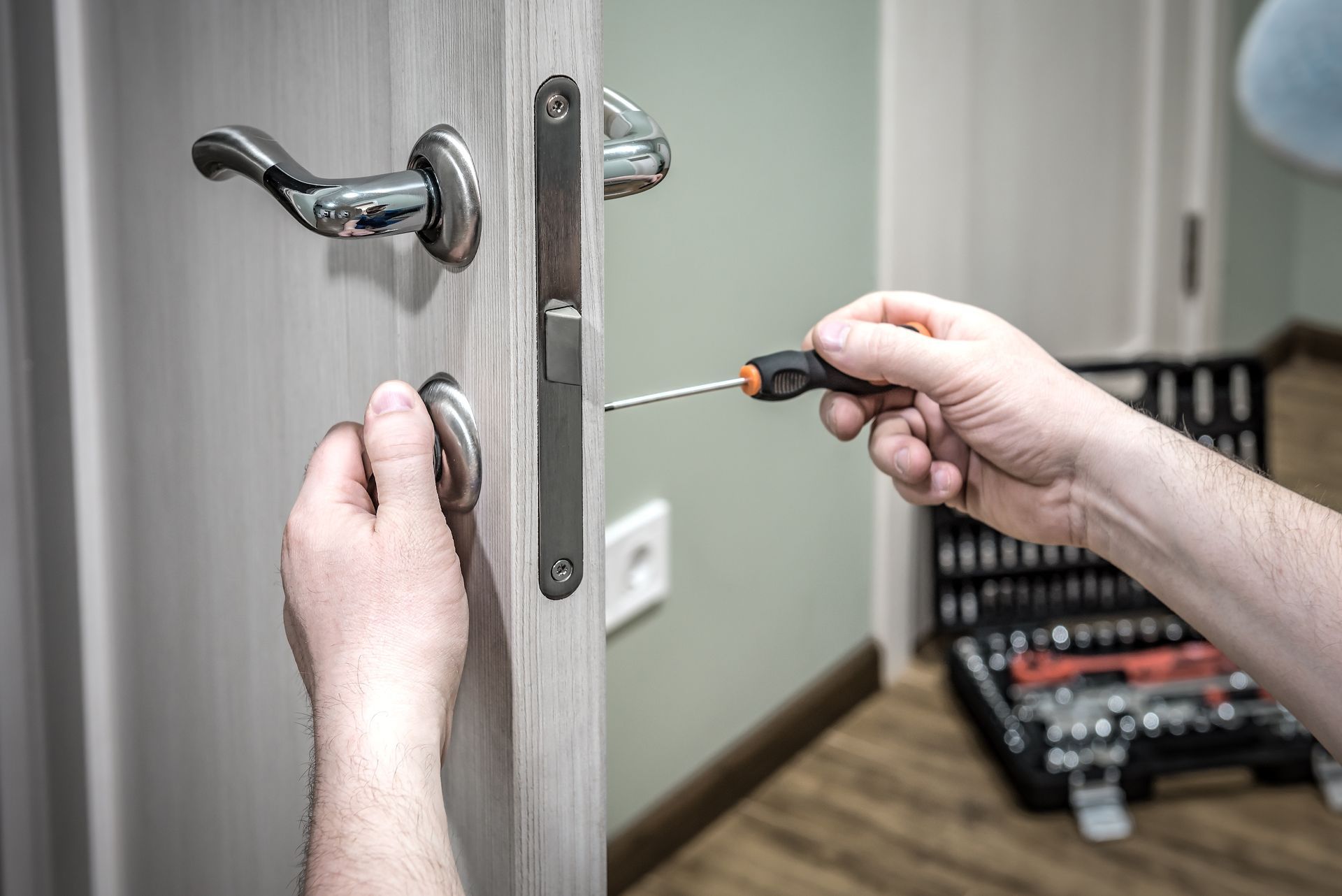
When a lock is flagged for replacement, the old hardware is fully removed and the door prep is inspected before the new unit is fitted. If the strike plate has migrated from its original position, or if the door has settled so that the bolt no longer aligns cleanly with the strike, those conditions are corrected during installation rather than left for the new lock to compensate for. A replacement lock installed into a misaligned frame will wear its latch prematurely and produce the same binding and catching complaints as the hardware it replaced.
After the new lock is fitted and the bolt is adjusted to throw cleanly, every new key is tested with the homeowner present before the technician leaves. That final test is not procedural courtesy—it confirms that the cylinder was cut and pinned correctly and that the key operates the lock through its full range of motion without resistance. You should be able to operate the deadbolt single-handed with light key pressure; anything requiring extra force indicates a problem with the cylinder, the door alignment, or both.
Some situations call for upgrading hardware grade at the same time as replacement, particularly on exterior doors that have only a knob-lock with no deadbolt, or on entry sets where the current lock is a builder-grade unit installed when the home was constructed. The technician can identify whether the existing door prep accommodates a higher-grade unit or whether modifications to the door are required.
Answers About How Residential Lock Work Gets Done
The questions below focus on what happens during a residential lock repair or replacement visit and how decisions are made about the hardware.
How does the technician decide whether to repair or replace a lock?
The cylinder, latch mechanism, and strike plate alignment are each checked independently; if the cylinder is worn but the latch and frame are sound, a cylinder replacement or repin is often sufficient without pulling the full lockset.
What causes a deadbolt to bind when the key is turned?
Binding most often comes from a cylinder that has worn pins, from key cuts that have become shallow through repeated copying, or from door frame movement that has shifted the cylinder out of alignment with the bolt channel.
Why does strike plate alignment matter when installing a new lock?
A strike plate that sits even a few millimeters off from the bolt's natural throw path causes the latch to drag across the plate edge rather than seat cleanly, which wears the latch tip and creates the sticky, resistant feel that homeowners typically attribute to the lock itself.
What happens when older mortise hardware in a Calhoun home needs to be replaced?
Mortise lock bodies require a specific pocket cut into the door edge, and replacement requires matching that pocket dimension or modifying it; a cylindrical lockset cannot be substituted without additional door work unless the door is prepped to accept both formats.
How are the new keys tested before the technician leaves?
Each key cut for the new lock is operated through the full cylinder range in both lock and unlock directions with the door both open and latched, confirming that the key turns without resistance and the bolt seats cleanly in the strike.
Surelock Systems LLC also repairs and replaces residential locks in Cartersville, Rome, Marietta, Dalton, and Acworth. To have a technician evaluate your current lock hardware and identify whether repair or replacement is the appropriate approach, call (770) 375-7675 to set up a visit.